What Is VR Team Building and How Does It Bring Teams Together?
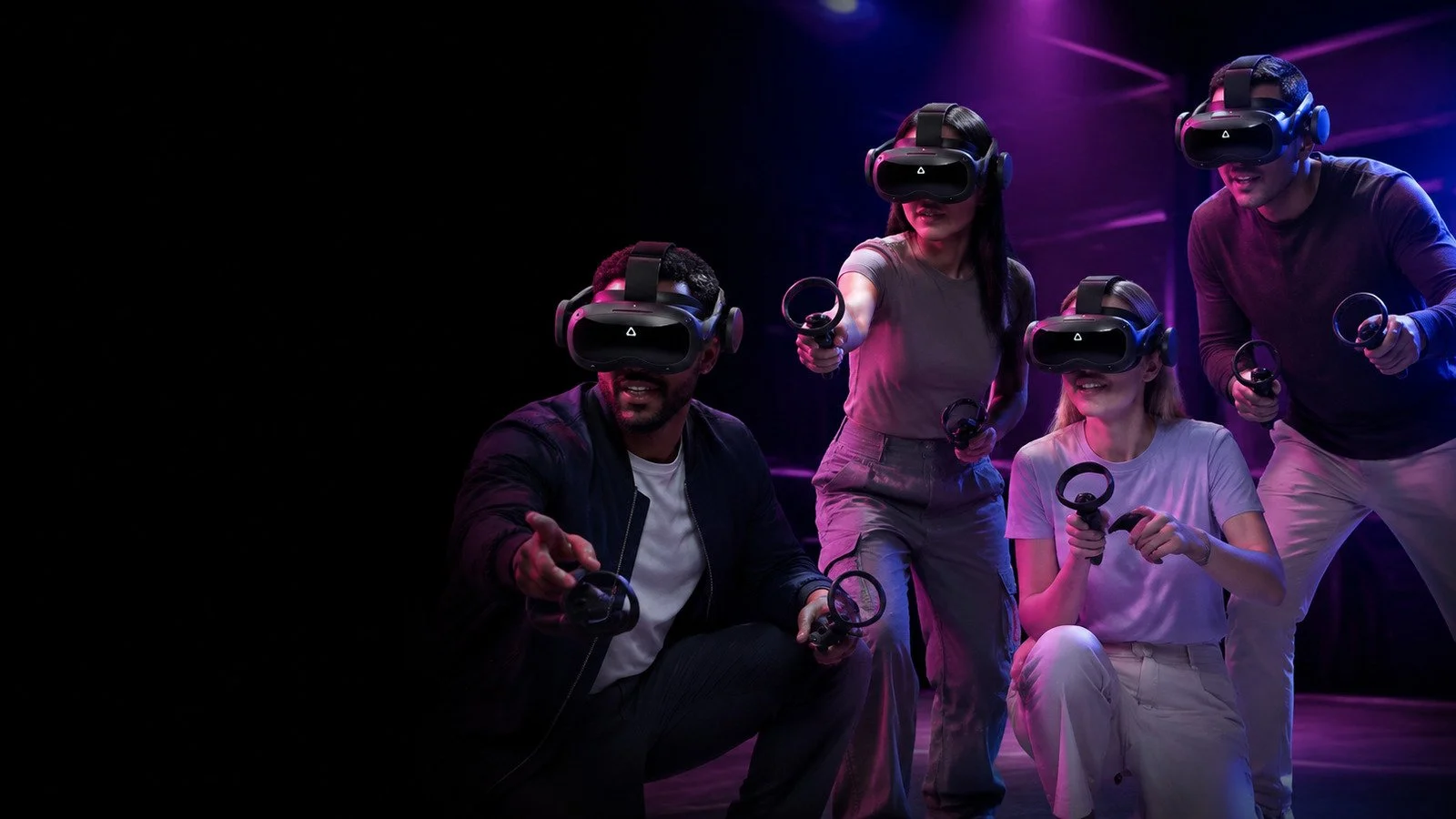
VR team building is a shared experience where coworkers communicate, solve challenges and work toward a common goal.
VR team building is a group activity in which colleagues enter a shared virtual experience and work toward a goal, solve a challenge or compete in a structured game. In free-roam VR, players also move through a physical arena, so the activity combines digital immersion with real-time conversation and coordination.
Its value is not that a headset automatically transforms a workplace. The value comes from giving people a fresh, low-stakes situation in which they need to communicate, adapt and share the result. A well-planned event then creates time to discuss what the team noticed and carry the useful observations back to work.
How VR team building works
The organizer chooses a goal, such as connection, celebration, communication practice or friendly competition.
The venue recommends games and a rotation plan based on group size, experience level and available time.
Staff fit the equipment, explain the controls and establish the arena rules.
Small teams enter shared missions where they must observe, communicate and respond to changing conditions.
The wider group compares results, shares memorable moments and - when useful - reflects on what helped each team succeed.
VRCADE’s team-building format is beginner-friendly and staff guided. Its Toronto-Scarborough venue can combine gameplay with a private room for presentations, workshops or strategy sessions, giving organizers the option to keep the business and social parts of an off-site in one location.
Why an unfamiliar challenge can reveal useful team habits
Communication becomes visible
Inside a shared mission, teams often need short, clear information: what someone sees, what should happen next and who is taking which task. Because the environment is unfamiliar, people cannot rely entirely on established workplace routines. They have to make communication explicit.
Coordination has an immediate consequence
A plan that exists only in one person’s head is difficult to execute. Multiplayer challenges encourage players to divide attention, time actions and adjust when the first idea does not work. The feedback is immediate - the puzzle advances, the group changes strategy or the score reflects the outcome.
Different strengths can emerge
The most experienced gamer is not always the most useful teammate. One person may notice details, another may keep the group calm, another may communicate clearly and another may test ideas quickly. A novel setting can make these informal roles easier to see.
Friendly competition adds energy
Scores and team-versus-team formats can give an event momentum, provided the organizer frames competition as shared fun rather than a high-stakes evaluation. The best format celebrates smart communication, memorable recoveries and team effort - not only the winner.
What the research can - and cannot - tell us
Research supports structured teamwork activities in general, but it does not guarantee that one recreational outing will produce a measurable improvement in workplace performance. For a more valuable event, choose a clear objective, encourage active participation and leave a few minutes afterward for the team to reflect on what worked well.
A 20-year scoping review of social VR research also identified presence, team dynamics and VR’s interactive affordances as recurring themes in collaboration. It noted both potential and important research gaps, including long-term outcomes, team-level trust and scalability.
A recreational visit to VRCADE is not the same as a formal, measured workplace-training program, and it should not be sold as a guaranteed performance intervention. The evidence supports designing the event around clear goals, active teamwork and reflection - not promising a percentage improvement from one outing.
Research source: teamwork intervention meta-analysis (PLOS ONE): Read the teamwork intervention meta-analysis
Further reading: 20-year social VR collaboration scoping review: Read the social VR collaboration review
VR team building vs. a conventional company outing
| Feature | VR Team Building | Conventional Company Outing |
|---|---|---|
| Purpose | A shared challenge designed around communication, coordination or problem-solving. | Social time, entertainment or a change of setting without a defined team objective. |
| Participation | Players actively participate in the same virtual mission. | Participation varies and may be individual, optional or mostly social. |
| Communication | Game tasks can require players to exchange information and coordinate their actions. | Conversation happens naturally but may not be part of the activity. |
| Structure | Arrival, briefing, team challenge, reset and time to reconnect. | Often more flexible and loosely scheduled. |
| Reflection | A short discussion afterward can connect the experience to the team’s chosen objective. | Reflection is usually not included unless the organizer adds it. |
| Best Fit | Teams that want an active, structured and memorable shared experience. | Teams prioritizing relaxed conversation and open social time. |
A dinner, bowling night or picnic can still be exactly right when the primary goal is relaxed conversation. VR is strongest when the organizer wants an active centrepiece and a shared story that crosses departments or social circles.
Choose the activity to match the objective
| Team Objective | Suggested VR Format | Why It Fits |
|---|---|---|
| Communication | Cooperative VR escape room | Players exchange clues, describe what they see and keep the group informed. |
| Problem-Solving | Puzzle or adventure experience | The team evaluates information, tests ideas and works toward a shared solution. |
| Coordination | Cooperative action mission | Players assign roles, coordinate timing and respond together as the situation changes. |
| Friendly Competition | PVP, arcade or mini-game challenge | Scores and short rounds create energy without requiring a long learning period. |
| Relaxed Connection | Adventure or family-friendly experience | A welcoming pace helps mixed-experience groups participate comfortably. |
A sample team-building agenda
The exact schedule should be confirmed with VRCADE, but this example shows how an organizer can combine work and play without rushing either part:
| Time | Activity | What Happens |
|---|---|---|
| 12:45 PM | Arrival and Check-In | Guests arrive, complete check-in and gather with their teams. |
| 1:00 PM | Briefing and Team Setup | VRCADE staff organize teams, fit the headsets and explain the controls and arena rules. |
| 1:15 PM | Free-Roam VR Challenge | Teams enter their arenas and work through the selected shared experience. |
| 2:00 PM | Reset and Refreshments | Players return the equipment, take a short break and reconnect with the full group. |
| 2:15 PM | Team Reflection | The group discusses memorable moments, communication and how the teams approached the challenge. |
| 3:00 PM | Food and Social Time | Continue in the private room, café or board-game lounge. |
| 4:00 PM | Wrap-Up | Final conversation, photos and event conclusion. |
Example schedule only. Timing can be customized for your group size, selected experience and event goals.
Planning checklist for organizers
Define one primary outcome: connection, celebration, communication, problem-solving or a combined meeting-and-social event.
Share the total headcount, preferred date, available time and any mobility or comfort considerations with the venue.
Ask how many teams will play at once and what non-playing participants will do during rotations.
Choose a content intensity that works for the whole group; not every team wants horror or action.
Tell participants that no previous VR experience is required and what clothing to wear.
Use mixed teams intentionally if the goal is cross-department connection.
Plan a short, optional debrief. Two good questions are more useful than a long forced discussion.
Keep competition friendly and avoid using entertainment scores as employee evaluation.
Frequently asked questions
Do employees need VR experience?
No. VRCADE provides setup and guidance, and the game choice can be matched to beginners.
Can a large team participate?
Yes. Up to 20 participants can play at once across VRCADE’s four free-roam arenas, with 2–6 players per arena. Larger teams can participate through organized rotations, with the café, board-game lounge and private rooms available between rounds.
Can we hold a meeting at the same venue?
Yes. A private room with a TV and flexible seating can support presentations, workshops or discussions before or after gameplay, subject to the selected package and availability.
Is VR team building only for technology companies?
No. The activity is based on communication, observation and shared play, not industry knowledge. A clear beginner briefing matters more than technical background.
How should we measure success?
Use a measure that fits the event goal: participation, qualitative feedback, cross-team interaction or insights from a short debrief. Do not treat a game score as a workplace-performance metric.
Turn the outing into a useful shared experience
The most effective VR team-building event is designed, not merely booked. Set a clear purpose, choose an accessible experience, build a workable rotation and leave time for people to talk afterward. The VR mission creates a fresh shared context; thoughtful planning helps the group turn that moment into connection.
Plan a VRCADE team-building event in Toronto: